Studs Terkel

Become familiar with Studs Terkel: http://www.studsterkel.org/index/html


Saturday, January 7, 2012

Columbine #2 - After and Before

This section of the novel focused on the aftermath of the massacre. How did the community react? What were the implications? What was the motif? And was there a specific target? This section was full of questions. And the biggest question was the WHY. 

The media at first took every piece of information. The calls recieved during the massacre were used, along with the never-ending interviews. Each student became a witness to the investigation, the words became interchangable. The media not only was trying to decipher what had happened, but also how it changed the community. Littleton united; they asked questions, mourned together, and wept together. Cullen describes their expressions as "vacant," like they didn't know what to feel. I believe this occured from the shock. There were also so many emotions inside, that they didn't know how to show them; they were angry, confused, scared, sad, tired, and surprised all at the same time. Friends and family were still missing, and even worse, some were dead. Some were left in the school lying on the floor, or even outside on the pavement. Some were in hospitals recieving treatment. Some crowded around hospital patients for comfort and others crowded around the premises of the crime scene. Rachel, a student killed, had flowers placed all around her car in the parking lot and students would gather around and weep together. Littleton underwent a dramatic change.

Many professionals were brought to the crime scene; the FBI, local police officers, detectives, therapists, psychologists, and more. Many questions were brought to the thinking table: Should they rebuild the school to the way it was or remodel? Which would shock the students more? How could they help families cope with the tragic event? How would they interview everyone? How would detectives and the media create a conclusion from the facts provided? Where would the students now go to school? Who had died? Who were the killers and conspirators? What was their motif? All these brains were trying to answer these questions. They researched, interviewed, and searched Dylan and Eric's homes and were able to make some conclusions, but the case was never over.

The common description of the killers was that they were wearing trench coats. This led students to believe they were a part of the Trench Coat Mafia (TCM), a group of students who wanted to make a statement. However, Eric and Dylan were not from the TCM, but only adapted the trench coats for the dark look and convenience because they easily stored many weapons. They confused the audience with these trenchcoats and made them seem like gothic and isolated loners who hated jocks, the common stereotype of shooters. I think this was smart for what they were doing becuase they were disguised and played a different role, like a movie! 

The more research they did, the more detectives found. Eric left behind journals explaining why he had put together this massacre and how he did it. There were sketches and reflections. He wanted them to find this. What I found interesting is that his past and childhood reflected upon his actions. Eric harassed an old friend Books who apparently betrayed him. Brooks had leaked information to Eric's parents about Eric and Eric was furious. He began vandalizing Brooks' home and encouraged others to do so as well on his website. He provided him with the address and described Brooks as an "asshole." Brooks was one of the people he harassed and vandalized. Everything slowly came together for the investigators.

I am eager to read the next section because I believe that they will reveal what was actually in Eric's journals. Why did he want to do this? How did he do this? And how did he convince Dylan to join him? Had Dylan chose to do this? How much input did Dylan have? After reading this section of many questions, more questions are raised.

Sunday, January 1, 2012

Columbine #1--Female Down

April 20, 1999, a tragic day, a day full of fear, doubt, blood, tears, surprise, rejoice, hope, smiles, and unity. I didn't know much about this day. I was five years old, therefore I don't remember anything and I never researched it. All I knew was that it was one of the biggest, planned, and surprising school shootings in the nation. This novel by Dave Cullen has taught me about the school shooting, and has reeled me in with every page I have read so far. The suspense and historical aspect intrigues me so much.

I really liked the opening to the novel. It provided a type of foreshadow to the big shooting. The principal gathered the school for an assembly to remind them to make wise choices during homecoming weekend. He wanted to see everyone's faces the next morning on Monday. By being proactive and making this speech, he reminded the school that they were a family. He didn't want any tragic stories, he wanted everyone to return back to their family, Columbine. His speech was so touching and heart-warming, yet effective, that it truly set the rest of the novel up. It set up the novel for the tragic, surprise school shooting.

Next, the novel focused on two figures, Eric and Dylan. These were the school shooters. No one would have known. They were so-called normal high school kids. Eric was described as a "cool brain. he smoked, he drank, he dated. He got invited to parties. He got high. he worked his look hard. . . He broke the rules, tagged himself with the nickname reb, but did his homework and earned himself a slew of As. And he got chicks. Lots and lots of chicks" (6). Eric seems normal, not depressed, not angry, not crazy. He was a normal high schooler with responsibilities that also knew how to have fun! Then there was Dylan who was "meek, self-conscious, and authentically shy. he could barely speak in front of a stranger, especially a girl. . . Dylan Klebold was a brain, too, but not quite so cool. . . He saw the worst version of himself" (7). Dylan beat himself up and wasn't like Eric, yet they were still best friends. Dylan is just shyer, especially with Eric by his side. But none of this shows that he could have been a shooter. They were two typical kids. When Cullen was  introducing them, it was just so hard to picture them conspiring against the whole school, against their friends. How did they come to this? Why did they want to do this? How did they hide everything?

The next thing that surprised me were the plans for the "Judgment Day." How did two kids, at the age of 17 plan such a horrific event? How did they plan it so detailed? They truly thought about everything. How to make the bombs, where to set them, when to trigger them, how the day would pass. They split their plan into three phases. The first, which never occurred due to dumb errors, was a bomb in the commons, acting as a decoy. They had detailed drawings of everything. Eric was the mastermind to this plan and even wanted to "watch the library and its inhabitants crash down upon the flaming lunchers" (33). Phase two was the phase Eric and Dylan were "savoring. It was also when they expected to die. They had little hope of witnessing act 3" (34). They would be firing at classmates and teachers point blank. This would be the killing spree they had been wanting and planning for the past year and a half, and they weren't going to mess it up. Everything was perfectly planned, down to the minute. I would turn the page and only 3 minutes had gone by on that day. Everything was in increments, so carefully planned. It amazed me how two kids could plan this so well, by themselves. HOW??? And how did they follow through with it? The killing seemed so casual, so mechanical. Cullen wrote how they "shared a whole lot of hoots and howls and hearty laughs. What a freaking wild time" (46). To find it as a fun time, is disturbing! Killing people is fun?? But how? And how did they seem so normal on the outside, if they are clearly messed up kids who have the desire to kill?

What struck me though were all the different reactions. The police were in awe and trying to label the situation and take hold of it. They tried to hold themselves together in order to support the community and control the situation. Most parents were a wreck, trying to find out if their children were alive. To be in a parent's shoes at that time would be heart-breaking and nerve-wrecking. All the parent could do is wait. Then there are the children inside, panicking, trying to find cover, trying to make sense of what is happening. Many called the police and news reporters to tell them information. So many were injured, some even dead. But throughout the whole shooting, the teachers were supportive and led the students to safety. This reminded me of all the fire drills throughout the year. The teachers and students have to take them seriously because you never know what will happen, just like those at Columbine didn't know.

My first impression of this novel, after reading the first section is awe and amazement, along with sadness. How can two students plan such an act and commit such a deed?

HAPPY NEW YEAR

When I was younger, my family and I would go around the dinner table on New Years and say a resolution. Often, I even had a list written out and at the end of each year, I would check off what I had accomplished, what I was still striving for, and goals that needed to be refined for the new year. This year I returned to this tradition and hopefully I will have an amazing year of accomplishments. 

Some of my resolutions--May seem typical, but this will suffice for an amazing year.
  1. Stay focused in school, and ignore the senioritus. Do not procrastinate.
  2. Study hard, achieving straight As.
  3. Help my family around the house by doing chores.
  4. Stay close with my friends and family.
  5. Keep working and saving money, in order to go on vacation.
  6. Get closer to my church youth group and God.
  7. LIVE, LAUGH, and LOVE
My mom also has shared stories with me of her New Years Day tradition in her family growing up. My pappou (grandpa in Greek) would have all his children do chores, work, read, study, etc. All day they would stay busy around the house or doing homework. My pappou would have them do this because he believed that whatever you did the first day of the year, you did for the rest of the year. So in order to have a successful year, they needed to start it off by doing everything right.

Tuesday, December 13, 2011

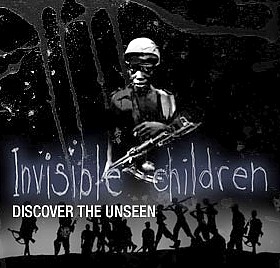
Invisible Children not so INVISIBLE anymore...

I feel as if there always has been some type of issue in Africa. Either crime and war, or famine, or education. Invisible Children highlights the child army of Joseph Kony and the many lives that have been lost. In total, there have been 966 civilian deaths and 1814 abductions. It's so hard to see those large numbers because we know that this would never happen in America. This year, at DHS, we have been introduced to Invisible Children and have chosen to support and raise money to help the cause, ending Joseph Kony's child army. After watching both videos, hearing Jed Jenkins speak, and exploring the site, I have come to a whole new understanding regarding Invisible Children.

The first video we saw at the School Chest presentation was informative and very motivating. To see that this organization has only grown because of teens and young adults is an insane idea. It was three college boys that shared their story to their friends and family. And it was they who spread it around the world, all now helping Uganda and the invisible Children. Now it is Deerfield's turn to spread the word.

The movie in class was also very informative, for it showed us what it was really like in Uganda. It began with the three boys fooling around, but then shifted to the incredibly powerful story of the invisible children. The name "Invisible Children" struck me because these children do seem invisible because no one was listening to Uganada's cries for help to stop Joseph Kony. The childrens' stories were very powerful. They described how they were afraid to stay in their home, afraid of being abducted, afraid of everything. Yet, they were so strong and made new families with other invisible children. And together they fought, and together they ran, and together they cried.

The site was very helpful and advocates what their mission is. It clearly informs readers of the history behind this cruelty, what is happening today, and how the audience can help. On the home page, near the bottom, different events happening are available. I saw that there were several events per month, showing that this organization is active and always striving to be heard and raise more awareness. I noticed while browsing that there was a link to donate and one of the choices was to donate to the legacy fund which helps send children to school and/or college and rebuild schools and curriculum. I found this really interesting and heart-warming because they took it a step further. Not only is this organization helping save the children from the Joseph Kony army, but they are also trying to re-create their lives and send them to school to be educated. Their protection plan also seems well planned, but a little like wishful thinking. Yes, it would be great to accomplish all of the goals, but it definitely won't happen too quickly unless the number of supporters increases immensely. The protection plan included: protection of communities with the LRA tracker, encouragement of LRA defection with the FM radio soon to be built, the providing of rehabilitation and family reunification, post-conflict recovery, and the promotion of the arrest of Joseph Kony and other LRA leaders. These are high goals that can be achieved some day if the support is still there, but without it nothing can be achieved. I find the LRA tracker to be very effective because it lowers the amount of abductions if people are able to flee from them in time, saving lives. The FM radio also seems very effective because they will be sending out "come home" messages directly to LRA members. This is ultimately what DHS is raising money for and it excites me that we can directly save these childrens' lives. The $15 I donated saved a life. That is so powerful, also contributing to the protection plan. The rehabilitation is necessary because many children have mentally, emotionally, and physically suffered. Rehabilitation is necessary to help them reunite with the community and family. The post-conflict recovery deals with educational purposes, which ensures that these children will have a bright future. Lastly, they promote the arrest of Kony and LRA leaders. If this plan is executed, the children will be protected and saved from the cruelty they should never have to endure.

Invisible Children has inspired and has caused me to reflect. I want to go out into the world just like the three teenage boys who founded this organization. I want to make a difference in the world and help those who need help. And by having School Chest support Invisible Children, I can easily start here in Deerfield by donating my money. I hope to some day explore the world and make an impact on others' lives.
http://invisiblechildren.com/

It is up to our generation to help end the war and build hope for these forgotten children. 
We make a difference.

Money and College

Lately I feel as if my life has revolved around college, and I'm not even in college! During my free time I am always pushed to write that college essay for that last college application, when I know it won't be the last. Or I check every schools' application status. Or I explore each college's site for extra scholarships. Or even look for days to visit. It never ends... Now that I have finished all my applications, I am waiting for responses. But in the mean time, I am looking to apply for scholarships and honors progams. And for many, a specific essay is required. So there I go, writing essays again. And once that is done, housing and financial aid begins. Again, it never ends...

So far, I have heard from half of my schools and narrowing down where I want to go has been very stressful. Money has become a large factor in my college choice and I find it very sad that students are unable to go to dream colleges because of money restrictions. I have applied to schools that I know will get into and recieve money, but what about that $40,000 prestigious school I have always dreamed about? What about dorming? And what about that great out-of-state school? I feel as if I have been limited with my college search, but there is nothing I can do. Almost all of the universities I have applied to are in-state, due to money. Most are private, putting more stress on me and my family. Both of my parents, my brother, and I all have jobs. We try to work as much as we can to help each other.

I hope to recieve as much money possible, in order for me to easily choose which university will fit me best. I will stay focused and determined in school, as well as at work. I wish college was free...

Abortion

Both websites are very ineffective and not very organized. They both provide facts, but not in an effective way. The Naral website, the pro-choice website, spends most of the time trying to prove why pro-life isn't the best decision. Instead of focusing on their own argument, the site is just attacking the other side of the debate. This makes the site seem unreliable and childish. It is very opinionated and emotional, rather than factual. But  the pro-life site is even more disappointing to me because they focus largely on the emotional aspect. They do not prove that abortion is not the right path well. They can easily use pictures and scientific research to prove their points, especially regarding how one may see a fetus as an unborn child, but they do not do so. Instead, the focus of  the site is on the laws to restrict abortions. I have browsed many different sites, and these two sites do not seem to promote their beliefs well.

As a teen, we feel the need to be independent and make our own decisions. We are entering college soon and making life-long decisions. Often, parents are right along beside the teen helping with these decisions. Regarding abortion, I believe a parental consent should be required. An abortion is too emotional for the minor to make a decision upon and will use their emotions to act. An adult however, will look at the situation differently and logically choose what is best for the minor. It is a parent's duty to look after the minor, no matter the circumstance. Abortion is such a serious issue and can be a life-changing decision. The operation is very dangerous and can hurt the minor both before and after emotionally, mentally, and physically. Thus, the right decision needs to be made carefully after weighing all the advantages and disadvantages, and the parent is there to do so. It is a proven fact that adults do make the better decisions than adolescents because their brain is fully developed. They can use logic, taken from the frontal lobe of the brain, where the adolescents will make decisions more abruptly from their gut and emotions. Adults will make a more responsible decision than the minor, and the parental consent should be required.

I do not support that the father of the child should be a part of the decision making regarding abortion. It is the female's body and he should not have to consent. It would be more respectful to let the father know what the decision is, but it is not required. A father consent is also impossible if the female was raped. If the father is in the picture or life of the mother of the child, they should discuss it and come to a decision together, but an agreement should not be necessary to follow through with an abortion.

Illinois is a very liberal state regarding abortion. The state law does not require parent notification or consent for an abortion operation. NARAL also has identified specific laws that have not been enforced. There are not a vast of specific restrictions on abortion in Illinois. I believe health insurance should pay for all abortions because if one is paying for coverage, operations or services related to abortion shouldn't be denied. It is their money and it should not be wasted.

Tuesday, November 15, 2011

Abolition of Capital Punishment in IL

I do support the death penalty, but after studying and research I have learned that it is not always fair in practice.  I wish that reforms could be made to keep the death penalty, but the justice system is so intricate that it would be very difficult. In Illinois, the concern is whether justice is being upheld with capital punishment. After re-evaluating several times, Governor Ryan believed that abolishing the death penalty would benefit the state and help uphold justice in the court. The execution of innocent people was reaching new heights and the sentences were becoming disproportionate.

I believe the driving force in the abolition of the death penalty was that the execution of innocent people was becoming an enormous flaw in the nation, even in Illinois. Steve Mill pointed out that each time a death row inmate was exonerated, the police and prosecution insisted that it was a rare occurrence. However, the facts show that these wrongful convictions weren't just isolated incidents. Michigan State University and the Death Penalty Information center shared that for every seven people executed, one is innocent and still executed. This is unbelievable! This shows that the flaw in the justice system is too large to fix with reforms. And until the flaw is fixed, innocent lives would be taken away. Northwestern professors and students were able to prove with DNA testing that seventeen death row inmates were innocent. The fact that the justice system didn't catch their mistake and Northwestern did is disturbing. People outside of the case and state courts were able to prove seventeen peoples' innocence. Governor Ryan was appalled and asked for explanations, but no one was able to give him any. The lives of innocent persons in Illinois has been threatened by the justice system, therefore I do support Governor Ryan's choice in abolishing the death penalty.

Further supporting the abolishment of capital punishment is the proportionality and distribution of it. There are many outside factors that show that the system is flawed. First, multiple sources have hared that a person is more likely to recieve the death penalty if the victim is white. Race still permeates through the justice system today, which is not professional or fair.  Governor Ryan also shared how there are geographical disparities within Illinois; "you are five times more likely to get a death sentence for first degree murder in the rural area of Illinois than you are in Cook County." Proportionality is an important problem in the system. Aside from geographical proportionality, there is disproportional sentences. For example, there may be two cases with the same circumstances and one person might get forty years in prison in one county, while the other is sentenced to death in another county. Also, Illinois has had cases of co-defendants that are equally or even more culpable and are sentenced to a term of years, while another that is less culpable defendant is put on death row. This situation was evident in the Juan Garza case that I presented to the class. Manuel Flores was found guilty for murdering two persons, while the court only had proof of one murder by Garza. Flores was sentenced to life imprisonment, while Garza was put to death. Why? The court had evidence that Flores killed two people, and that Garza killed one. Here, along with many other cases, the death penalty is not applied justly or evenly. To prevent further cases like that of Garza's Governor Ryan made a good decision in abolishing the death penalty.

I guess all states should follow Governor Ryan's decision to save lives and uphold justice within the nation. He stated, "Our capital system is haunted by the demon of error - error in determining guilt, and error in determining who among the guilty deserves to die. Because of all of these reasons today I am commuting the sentences of all death row inmates." He couldn't have put it any better. The error is too big for it to be fixed. Yet, there are always those that believe Governor Ryan made a mistake because it deters crime, gives closure to families, and is a fair punishment. All of these arguments are wrong. According to the American Civil Liberties Union 2011,  a survey showed that the death penalty was ranked lowest nationally among all ways to reduce violent crime. The death penalty in a way also just provides families with revenge. Capital punishment can be seen as the most premeditated of murders. I completely support Governor Ryan's decision regarding the death penalty, for lives will be saved and justice will be renewed.

Monday, November 14, 2011

Marquette Visit

This past week I finished all my applications. It was the best feeling. It felt as if a huge load was lifted off my shoulders, I felt stress free. I felt so accomplished and confident. As a reward, I visited Marquette University for the second time. My first time I attended a campus tour and presentation, but this time was more for fun. I shadowed my best friend and stayed over two nights. It felt like I was truly a college student.

Friday morning I attended all of Molly's classes: theology, biology, chemistry lecture and lab. I was glad to have come this day because chemistry and biology are my favorite subjects. I loved the small class size and felt like a true student at Marquette. I took notes, answered questions with Molly on her clicker and even was able to participate in a lab. Knowing that I easily survived these classes reassured me that I will do fine in college, no matter where I decide to attend. The fact that I understood what was going on in classes, sometimes even more than the actual students, scared off all my fears of college. My older friends and cousins made college seem so hard, like it was impossible. But getting this experience only readied me for the college experience. I am not saying her classes weren't challenging, but they weren't super easy. I found Marquette to be a great fit for me. Can't wait to see other colleges up close.

Not only did the classes seem right, but the Marquette environment felt perfect. Everyone was so friendly and offered me a helping hand. Molly's friends became my friends quickly and were sad to hear that Marquette wasn't my top choice. However, the more time I spent at Marquette, the more I loved it. I was even able to attend the first Marquette basketball game of the season. I loved the school spirit and the intensity. Everything seemed perfect. If  I do choose Marquette, I know that I will succeed and have an amazing four years!

Thank you to my best friend Molly and her friends for making me love Marquette so much!

Reflection on the Debate

Public speaking never was a problem for me until recently. At a young age, I was able to easily recite poems by heart and memorize many lines in a short period. I also have a freaky good memory with numbers. I know so many peoples' cell and home phone numbers by heart that I don't even need my phone contacts. Even presenting information to a classroom. I was always a natural. However, the past few years I feel as if this hasn't been the case. I don't get stage fright, but I'm not as good as I used to be. I'm not as good as memorizing and thinking on the spot anymore, especially relating to school topics.

Going into the debate I personally did not feel ready. I needed one more day to review the case in order to feel more comfortable. By doing so,  I would be more fluid and in control when speaking. Yet, this was not the case. I do not have any complaints with my presentation because I believe Danny and I did a great job for pulling it together in a short amount of time. Hearing Danny speak amazed me though. He was so confident and natural. It was as if he can talk for hours without an once of nervousness. This intimidated me in a way because he was so good. I hope to become better at public speaking, especially in front of a class. Hopefully my job as a teacher's aid will help me improve these skills. I hope to learn to naturally speak in front of people.